100 Days Division Workbook for Kids Ages 6-8 Vol 1 — Book Review & Buyer Guide
A practical guide for parents, teachers, and caregivers deciding whether this daily division practice workbook is a good fit for a child who is building confidence with math.
Disclosure: As an Amazon Associate, 4BestBuy earns from qualifying purchases. This means we may receive a commission when you purchase eligible products through links on this page, at no additional cost to you. Some links in this article are affiliate links. If you make a purchase or take an action through one of these links, 4BestBuy may earn a commission at no additional cost to you.
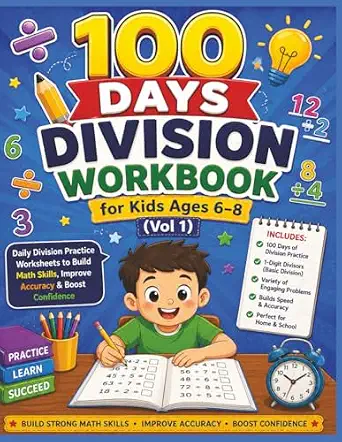
Quick verdict: The 100 Days Division Workbook for Kids Ages 6-8 Vol 1 by Praveen Adurty is presented as a math workbook built around daily division practice worksheets. Its main appeal is routine: instead of treating division as a one-time lesson, families can use short, repeated practice to help a child become more comfortable with division problems. Because the listing information supplied for this review does not include a page count, price, rating, or detailed skill sequence, this guide focuses on what can be honestly evaluated: the stated purpose, the likely use case for daily practice, and the questions buyers should ask before ordering.
Quick Navigation
Featured Review: 100 Days Division Workbook for Kids Ages 6-8 Vol 1
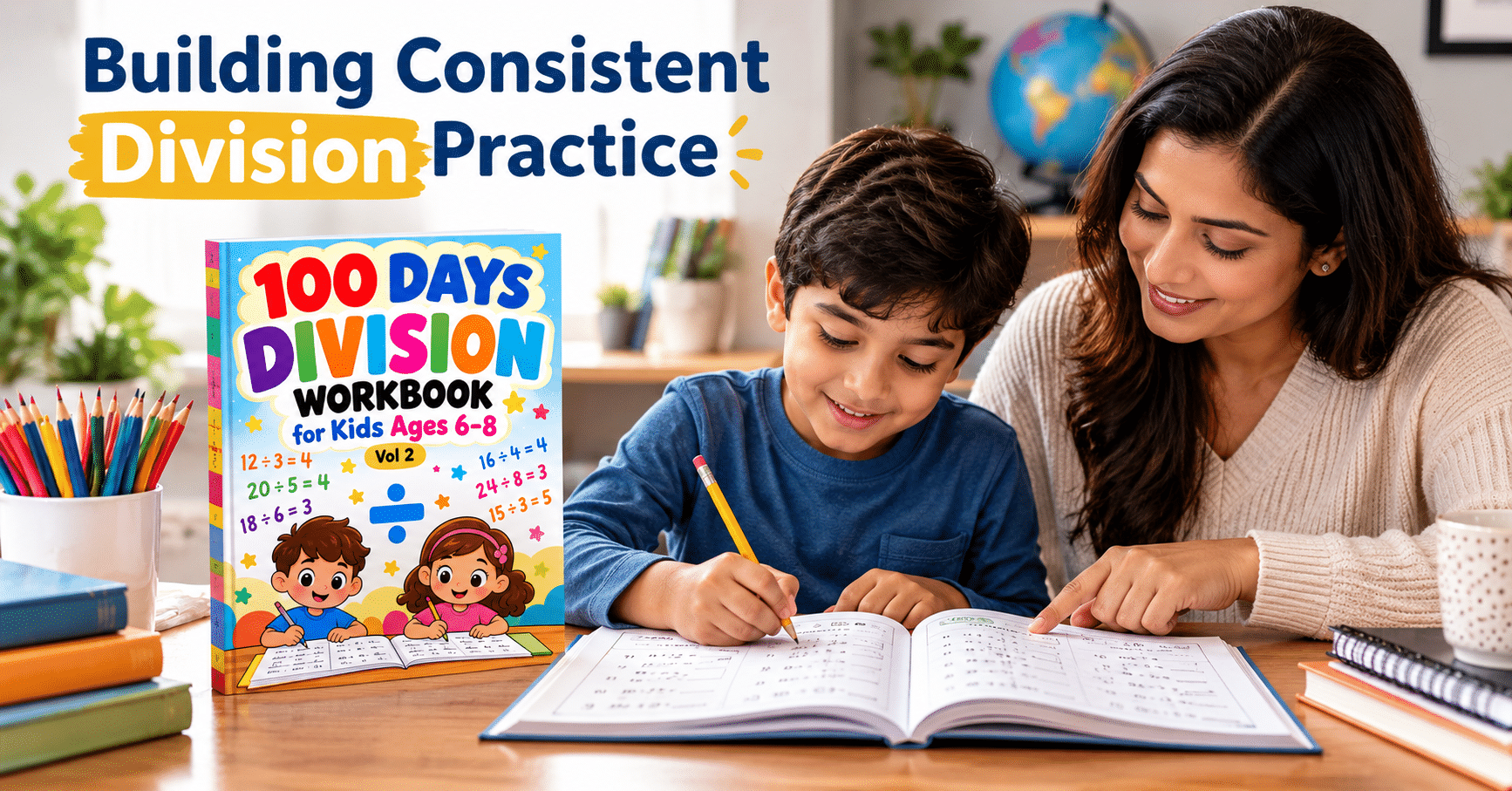
A workbook like this is most useful when it becomes part of a calm, repeatable routine. The goal does not have to be completing a large number of problems in one sitting. For many children, a short session with clear expectations is easier to manage than a long worksheet session that feels like a test. Parents can begin by reviewing one or two examples together, then allow the child to work independently while staying available for questions.
What Daily Division Practice Can Help With
Division is not only a calculation skill. Children also need to connect division with ideas such as sharing equally, making groups, repeated subtraction, multiplication facts, and interpreting a remainder when one appears. A worksheet can provide useful repetition, but children often understand the work more deeply when adults connect the written problem to a simple real-world example.
1. Building a regular practice habit
The “100 days” concept suggests a routine-based approach. Daily practice can make division feel more familiar because the child encounters related problems repeatedly instead of leaving the skill untouched for long periods. Families may choose to use the workbook every school day, on selected days each week, or in shorter sessions that fit the child’s schedule.
2. Supporting recall and fluency
Once a child understands what division means, regular practice can help make basic facts easier to recall. However, speed should not be the only measure of progress. Accuracy, explanation, and willingness to try are also valuable. If a child is guessing quickly, slow the session down and ask the child to explain how they found the answer.
3. Revealing where extra help is needed
A workbook can also act as a simple observation tool for adults. Repeated mistakes may show that the child needs more help with multiplication facts, place value, grouping, reading the problem, or understanding the meaning of division. The solution is not always more worksheets. Sometimes the child needs counters, drawings, blocks, or a conversation using everyday objects.
4. Making progress visible
A consistent workbook routine can give children a visible record of effort. Adults can celebrate process-based wins such as completing a practice session, correcting an error, explaining a strategy, or asking for help. This is especially helpful for children who have started to view math as something they are “bad at.” Confidence grows when children see that skills can improve through supported practice.
How This Workbook Compares With Other Practice Approaches
The table below compares the featured workbook with several general ways families may organize division practice. These are not claims about specific competing products. They are practical alternatives to consider when deciding what type of learning support best fits the child.
| Practice approach | Best suited to | Main advantage | What adults should watch |
|---|---|---|---|
| 100 Days Division Workbook | Children who benefit from scheduled written practice | Provides a focused division routine | Check whether the current difficulty matches the child’s readiness |
| Loose printable worksheets | Families wanting flexible, mix-and-match practice | Easy to customize by skill or difficulty | The child may not have a clear sense of sequence or progress |
| Hands-on math activities | Children who need concrete examples | Makes sharing and grouping easier to visualize | Written practice may still be needed later |
| Digital math practice | Children who respond well to interactive screens | Can provide immediate feedback and variety | Screen time, distraction, and subscription details may matter |
For many families, the best answer is not choosing only one approach. A child might use the workbook for focused written practice, then use objects or drawings when a concept is confusing. Parents seeking broader educational resources may also want to browse the 4BestBuy books promotion page for other age-appropriate reading and activity ideas, while remembering that any individual book should be checked for its actual topic and format.
How to Use the Workbook Effectively
A workbook becomes more useful when the adult’s role is clear. The adult does not need to lecture through every problem, but should create a supportive environment in which mistakes are treated as information rather than failure.
Start with a readiness check
Before beginning a daily routine, ask the child to solve a few simple division examples orally or with objects. Notice whether the child understands the idea of equal groups. If the child cannot yet explain what division represents, begin with counters, blocks, snacks, or drawings before expecting independent worksheet work.
Keep sessions short and predictable
Choose a regular time that does not compete with meals, bedtime, or other stressful transitions. A short session may be more productive than an ambitious target that creates resistance. The exact number of questions should depend on the child’s concentration, confidence, and current schoolwork.
Ask “how did you think about it?”
When an answer is incorrect, avoid immediately supplying the correct answer. Ask the child to describe the steps they took. This can reveal whether the problem came from a multiplication fact, a copying error, a misunderstanding of grouping, or difficulty reading the question.
Pair written work with real examples
If a child is working on a problem involving equal groups, use small household objects to model it. For example, an adult might ask the child to share a number of objects equally among a few people or place them into equal groups. This connects the abstract written exercise to a situation the child can see and touch.
Track understanding, not only completion
Completing a page does not automatically mean the skill has been mastered. Look for signs that the child can explain the strategy, recognize when an answer is unreasonable, and apply the idea in a slightly different context. If the child is consistently frustrated, reduce the workload and provide more guided support.
Families who are also building a home learning library may find it useful to explore related resources such as puzzle and activity book ideas, especially when a child benefits from varied practice. If you are creating your own educational books or worksheets, the guide to publishing low-content books through Amazon KDP may also provide useful background, although publishing a workbook is different from selecting one for home use.
Buyer Guidance: Questions to Ask Before Ordering
The title and description make the book’s central purpose clear, but a careful buyer should still inspect the live listing before purchasing. Product pages can contain information about format, interior examples, availability, and current pricing that is not included in the brief description used for this review.
- Is the child ready for division practice? Check whether the child understands basic grouping and has some familiarity with multiplication relationships.
- Does the child need repetition or explanation? A worksheet-focused resource may suit a child who needs practice, while a child who is confused about the concept may first need hands-on teaching.
- Will the child work independently? Some children can complete written practice alone, while others need an adult nearby to read directions, model the first problem, or provide encouragement.
- Does the current listing show enough interior information? Look for available previews or sample pages so you can assess the visual style and level of challenge before ordering.
- Is the format convenient for your routine? Consider where the child will work, how pages will be stored, and whether the workbook fits the family’s school or after-school schedule.
- Does the price fit your budget? The price may change, so use the live Amazon listing to check the current amount rather than relying on an old figure.
Parents interested in learning tools beyond printed workbooks can also read the guide to planners and workbooks for focus and organization. That type of resource addresses a different need, but the same buyer principle applies: choose materials that match the child’s actual routine, attention span, and current skill level rather than buying based only on an age label.
Related Recommendations for Parents and Creators
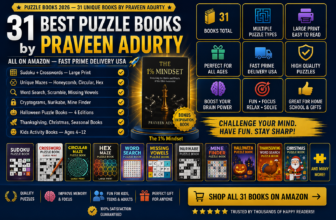
If you are also interested in practical books for personal growth, The 1% Mindset may be worth exploring as a separate adult-focused recommendation. It is not a children’s math workbook, so it should be considered a different type of reading choice rather than a companion teaching resource.
For readers who want to think more carefully about leadership and financial responsibility, The Fake CFO by Praveen Adurty is another separate recommendation. It is intended for an adult audience and is not connected to the division workbook’s educational purpose.
If you are a creator, teacher, or small business owner developing educational content, the AI Business Growth Toolkit 2026 may offer prompts, templates, checklists, worksheets, trackers, and a 30-day implementation plan for organizing business and content tasks. It does not guarantee income or sales, and it is not required to use the featured workbook.
Authors and publishers who are researching workbook interiors, puzzle books, or KDP workflows may also want to review BookBolt. The optional coupon code is BOOK001. BookBolt can be useful for research and publishing workflows, but using a tool does not guarantee book sales, rankings, or income.
When a workbook needs custom cover or interior design assistance, families and creators can also consider buyer-oriented Fiverr services. For direct help with KDP book design, puzzle layouts, book covers, or AI voiceover projects, you can review Praveen Adurty’s Fiverr profile. Always review the current service description, delivery details, and buyer requirements before ordering.
Readers who want more practical business and publishing resources can also browse the AI tools for small business guide. These recommendations are separate from the children’s workbook, but they may be relevant to adults building organized education, publishing, or content workflows.

The 1% Mindset
The foundational business mindset book on this list — built on one premise: improving by just 1% every day compounds into extraordinary results. Covers time management, decision-making, resilience, financial intelligence and deep focus. The essential starting point before any other book on this list.

The Fake CFO
A revealing exposé on how toxic finance leaders rise through organisations, manipulate power and create lasting damage. Essential reading for every CEO and founder who has ever delegated financial responsibility. Identifies the 10 warning signs before the damage is done.
AI Business Growth Toolkit 2026
A practical toolkit for entrepreneurs, creators, consultants, freelancers and small business owners who want to use AI to build, market, sell and automate their business. Packed with 500+ AI prompts, templates, checklists, worksheets, trackers and a 30-day implementation plan to help you find opportunities, improve productivity, attract customers and grow your business.
Frequently Asked Questions
What is the 100 Days Division Workbook for Kids Ages 6-8 Vol 1?
It is a math workbook by Praveen Adurty. The book’s supplied description says it contains daily division practice worksheets intended to build math skills and boost confidence.
Is this workbook suitable for every child between ages 6 and 8?
Not necessarily. The age range in the title is a useful guide, but children develop math skills at different rates. Parents should consider whether the child understands basic grouping and is ready for written division practice. Checking the current Amazon listing for interior previews may also help with the decision.
Can a child use it independently?
Some children may be able to complete familiar problems independently, while others may need an adult to explain directions, model an example, or talk through mistakes. Independent use depends on the child’s readiness and confidence, not only on age.
How long should a daily practice session be?
There is no single correct length for every child. A short, focused session may work better than a long session that causes frustration. Adjust the amount of work based on attention, accuracy, and the child’s willingness to explain their thinking.
Does the workbook replace math instruction?
A practice workbook should not be treated as a complete replacement for teaching or individualized support. It can provide repetition, but children may also need explanations, real-world examples, hands-on materials, school instruction, or help from a teacher when a concept is unclear.
Where can I check the current price and availability?
Use the exact Amazon listing for 100 Days Division Workbook for Kids Ages 6-8 Vol 1. Prices and availability can change, so the live listing is the best place to confirm current details.
Final Recommendation
The 100 Days Division Workbook for Kids Ages 6-8 Vol 1 is worth considering if your child needs a focused, repeatable way to practice division and your family prefers written worksheets. Its strongest clear benefit is the daily-practice concept described in the listing. The most important buying step is to compare the child’s readiness with the current interior preview and listing details before ordering.
BUDGET CHOICE
Use simple household objects, teacher-provided practice, or free paper exercises alongside a small, consistent routine. This is the lowest-cost route, but it requires adults to organize the practice and monitor the progression.
EDITOR’S CHOICE
The 100 Days Division Workbook for Kids Ages 6-8 Vol 1 is the best all-round choice in this review for families who want a dedicated division workbook with a daily-practice focus. Confirm the live listing details before purchasing.
PREMIUM CHOICE
Pair the workbook with personalized support from a qualified teacher or tutor, hands-on materials, and regular progress conversations. This can offer more individual guidance, but it requires additional time and expense.
For readers who want to purchase the featured book, the verified buy link is below. Remember that the book is a practice resource, not a guarantee of a particular academic result. The most effective results will depend on readiness, consistency, explanation, and encouragement.
Ready to Review the Workbook?
Check the current Amazon listing for the available format, price, previews, and availability before deciding whether it fits your child’s learning routine.
Follow 4BestBuy
Follow along for book ideas, buyer guides, publishing resources, and practical recommendations.
Math Practice for Kids
Ages 6-8
Daily Worksheets
Praveen Adurty