🤔 The Question Everyone’s Asking Right Now
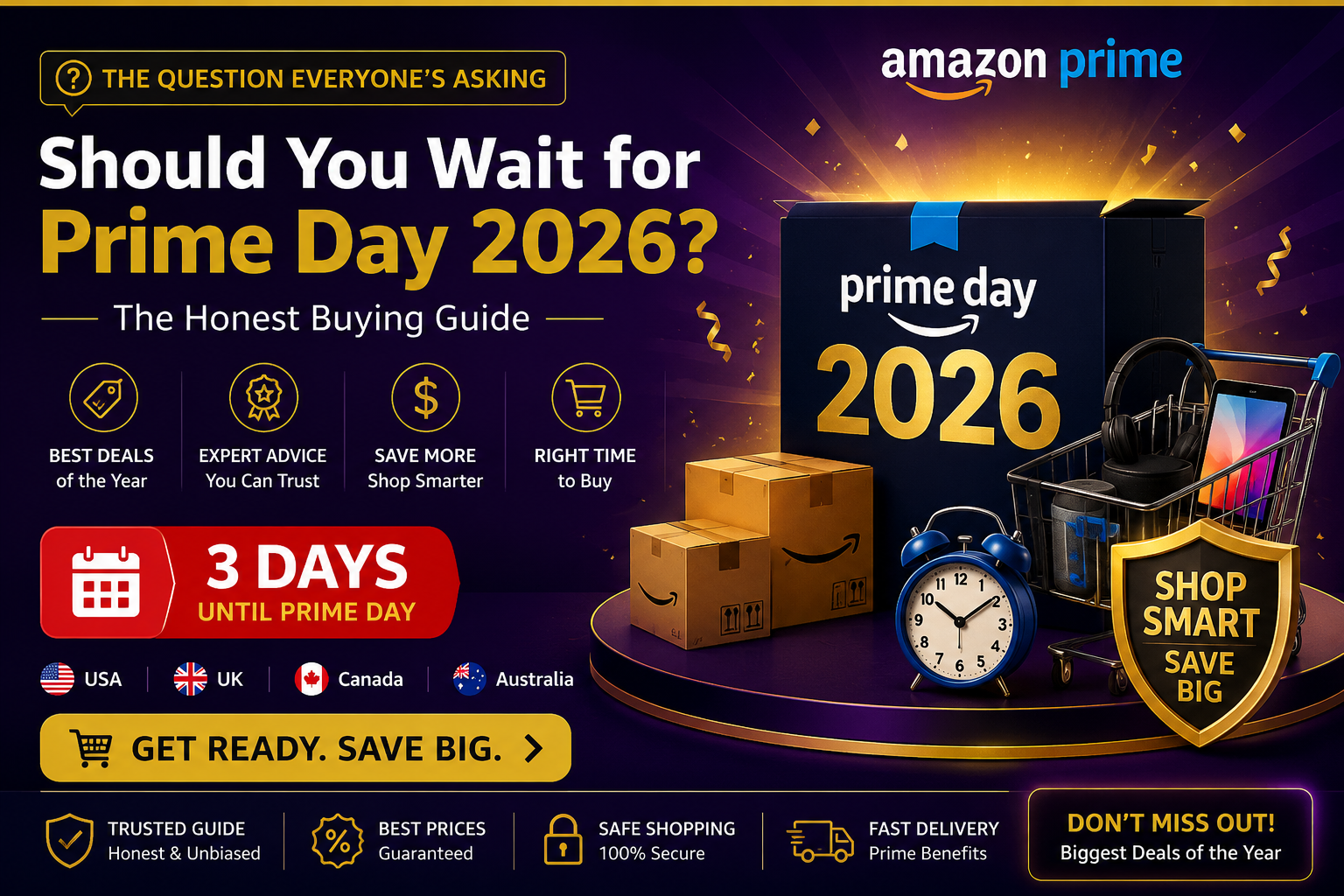
Should You Wait for Prime Day 2026?
The Honest Buying Guide
Buy now or wait 3 days? Here’s the category-by-category truth — no hype, just an honest breakdown for shoppers in USA, UK, Canada and Australia.
Disclosure: This article contains Amazon affiliate links. As an Amazon Associate we earn from qualifying purchases at no extra cost to you.
If you’re staring at something in your Amazon cart right now wondering whether to hit “buy” or wait three more days — you’re not alone. This is the most common question every June, and the honest answer isn’t “always wait” or “always buy now.” It depends entirely on what’s in your cart.
Here’s a category-by-category breakdown based on how Amazon Prime Day pricing has actually behaved in past years, so you can make the right call today — June 20, 2026 — instead of guessing.
The Quick Verdict
✅ Wait for Prime Day
- Kindle, Echo, Fire TV (Amazon-brand)
- Laptops, headphones, smartwatches
- Robot vacuums, air fryers, coffee makers
- TVs and major electronics
- Anything not urgent this week
🛒 Buy Now, Don’t Wait
- Groceries and household essentials
- Anything you urgently need this week
- Items already on a deep lightning deal
- Books (rarely discounted further)
- Basic everyday items

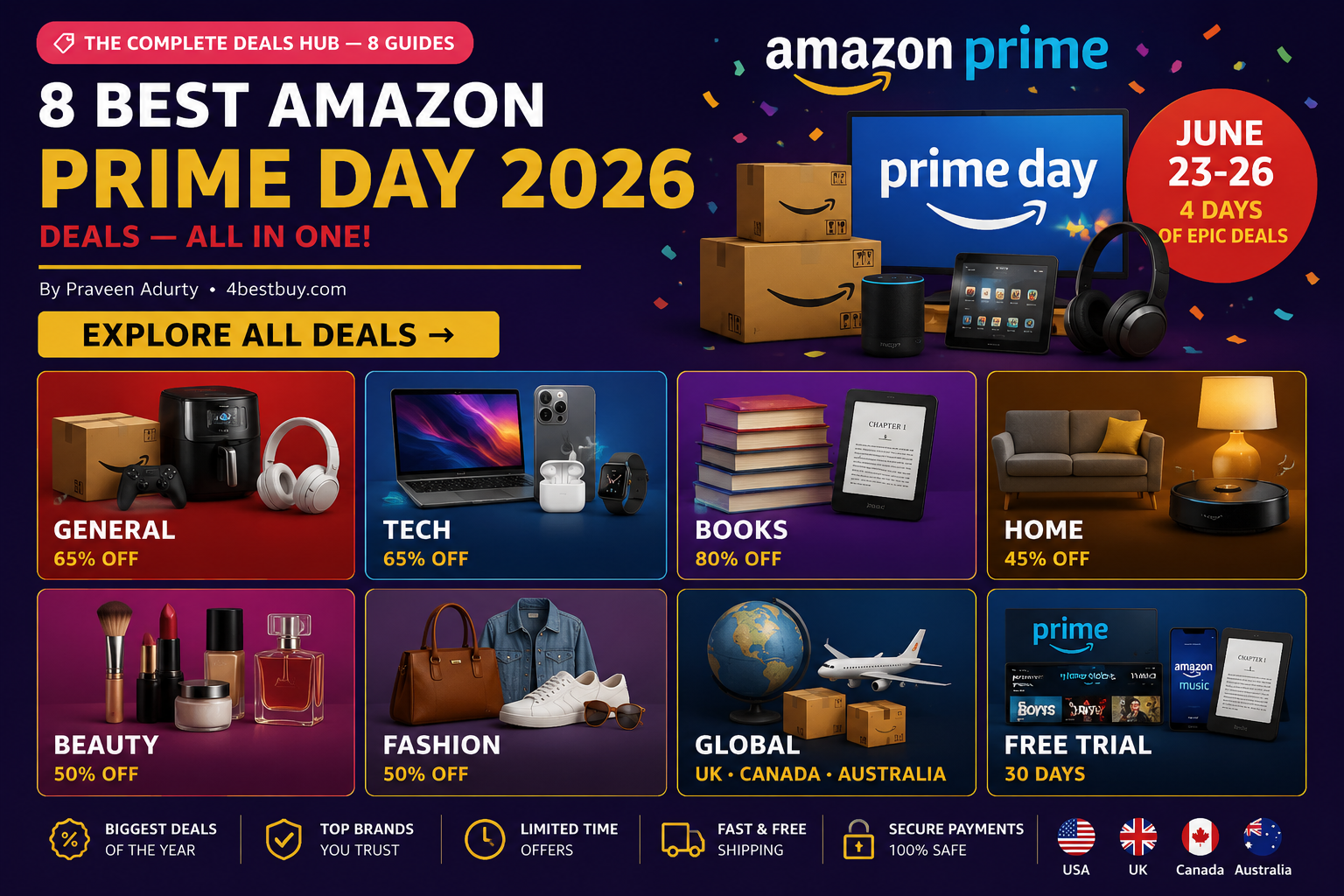
🔥 Already Decided to Wait? Browse Our Complete Prime Day 2026 Hub
8 full category guides covering Tech, Books, Home, Beauty, Fashion and more — all in one place.
Should You Wait for Prime Day 2026? What’s Genuinely Worth Waiting For
| Category | Verdict | Why |
|---|---|---|
| Amazon devices (Kindle, Echo, Fire TV) | Wait | Amazon controls these prices directly and uses them as headline deals every year — 30-40% off is typical. |
| Laptops & major electronics | Wait | Reliable discounting from third-party brands, though less predictable than Amazon’s own products. |
| Robot vacuums & kitchen appliances | Wait | Amazon prioritizes these for Prime Day visibility — strong, consistent discounts. |
| Smartwatches & wearables | Wait | Apple Watch, Garmin and Fitbit regularly see record-low prices during the event. |
| Books & Kindle ebooks | Buy if needed | Some Kindle deals do appear, but print books rarely drop meaningfully further. |
| Groceries & essentials | Buy now | Not meaningfully discounted — you’ll just pay full price for 3 extra days of waiting. |
Why Categories Behave So Differently During Prime Day
The reason “should you wait for Prime Day 2026” doesn’t have one answer comes down to who actually controls the discount. Amazon directly sets and discounts the price of its own hardware — Kindle, Echo, Fire TV, Ring — because these products drive long-term Prime subscription value, not just a one-time sale. That’s why these categories see the deepest, most reliable cuts every single year without exception.
Third-party electronics work differently. Brands like Sony, Bose, Anker and Samsung negotiate Prime Day placement with Amazon in advance, agreeing to specific discount tiers in exchange for prominent visibility during the event. The discount is real, but it’s negotiated months ahead — meaning the price drop is planned, not spontaneous, and it’s usually consistent with what that brand has discounted in previous Prime Day events.
Groceries, household basics, and most books sit in a different category entirely. These are low-margin, high-frequency purchases where Amazon has little incentive to discount further — people buy them regardless of sales. If you’ve been told “everything goes on sale during Prime Day,” that’s simply not accurate; it’s a small number of high-visibility categories doing most of the discounting, surrounded by thousands of items at completely normal pricing.
A Closer Look: Electronics and Smart Home
If there’s one category where waiting is almost always the right call, it’s electronics. Laptops, in particular, tend to see their single biggest discount window of the entire year fall on Prime Day, even ahead of Black Friday for certain models — because back-to-school shopping season overlaps directly with Prime Day timing in the USA, UK and Canada. Manufacturers want inventory moving before the new school year, and Amazon wants headline laptop deals to draw shoppers in.
Smart home devices follow a similar pattern. Robot vacuums, smart plugs, video doorbells and security cameras are exactly the kind of considered purchase people research for weeks before buying — which makes them ideal Prime Day anchors, since shoppers are often already primed and just waiting for the right price trigger.
A Closer Look: Why Books Rarely Get Cheaper
This one surprises people. Physical books operate on razor-thin margins already, and publishers set minimum advertised pricing that retailers — including Amazon — are contractually limited in how far they can discount. Kindle ebooks have more flexibility since there’s no print, shipping or warehousing cost involved, so you will occasionally see genuine Kindle-specific Prime Day pricing, particularly on bestseller lists and limited-time author promotions.
If you’ve got a wishlist of physical books, Prime Day generally isn’t the moment to wait for — but Kindle versions of the same titles are worth checking on the day itself, since digital discounts do appear even when print prices stay flat.
Frequently Asked Questions
Is Prime Day actually cheaper than Black Friday?
For Amazon-brand devices specifically — usually yes, Prime Day and Black Friday land within a few percentage points of each other, with Prime Day sometimes winning on Kindle and Echo pricing. For general electronics and big-ticket items, Black Friday and Cyber Monday tend to edge ahead since more retailers compete directly during that window.
Do I need an Amazon Prime membership to access Prime Day deals?
Yes — Prime Day pricing is exclusively available to Prime members, which is the entire point of the event from Amazon’s side: driving subscription sign-ups. A free trial covers you for the event if you’re not already a member.
What’s the single biggest mistake shoppers make on Prime Day?
Buying something purely because it’s labeled a “deal” without checking whether the price is actually lower than what it sold for last month. Price-tracking tools solve this in seconds and should be standard practice before any Prime Day purchase over $50.
Are Prime Day deals the same in the UK, Canada and Australia as in the USA?
Broadly yes — the same categories (Amazon devices, electronics, smart home) see the strongest discounting across all four markets, though specific product availability and exact discount percentages vary by region and local Amazon marketplace inventory.
How We Approach This Guide
This “should you wait for Prime Day 2026” breakdown is built from tracking Amazon’s Prime Day pricing patterns across previous years rather than guessing at what “should” happen. Categories don’t shift dramatically year to year — Amazon’s incentive structure stays consistent, which is exactly why the same categories (its own devices, electronics, smart home) reliably anchor every Prime Day, while groceries and books reliably don’t. We update this guide each year rather than rewriting it from scratch, because the underlying logic holds even when specific products change.
That said, no guide can promise a specific product will drop by a specific percentage — Amazon doesn’t publish discount schedules in advance, and individual sellers set their own Prime Day pricing within Amazon’s general framework. What we can say with confidence is which categories have consistently delivered real value historically, and which ones consistently haven’t, which is the actual decision you need to make today.
Should You Wait for Prime Day 2026 If You’re in the UK, Canada or Australia?
The same general logic applies across all four markets, but a few regional notes are worth knowing. UK Prime Day timing typically runs alongside the US event but Amazon.co.uk pricing and stock levels are set independently — a deal trending in the USA isn’t guaranteed to mirror exactly in the UK. Canadian shoppers should know that currency conversion sometimes makes a “discount” look smaller in CAD than the headline USD percentage suggests, so checking the actual Amazon.ca price against recent history matters even more. Australian Prime Day dates have occasionally shifted by a day or two relative to the US event due to time zone scheduling, so confirming exact local start times the week of the event is worth the two minutes it takes.
Not everything billed as a “Prime Day deal” is a meaningful discount. Some prices get quietly inflated beforehand so the “sale” price looks more dramatic on June 23. Before buying anything during the event, a quick price-history check confirms whether it’s a genuine drop — or just clever framing.
The honest answer to “should you wait for Prime Day 2026” is: build your wishlist now, while you have time to compare calmly, rather than deciding under pressure once the countdown clock starts. This single habit — checking history before checking out — is what separates shoppers who genuinely save money from shoppers who just feel like they did.

📚 The 1% Mindset by Praveen Adurty
Patience is a skill — and so is knowing exactly when to act. The 1% Mindset breaks down the habits of people who consistently make the right call, in money and in life. A 1% daily improvement compounds to 37x better over one year.
Buy The 1% Mindset on Amazon →💡 Build Your Wishlist Today
Add the items you’ve decided to wait on directly to your Amazon Wishlist now. When Prime Day starts June 23, you’ll see price drops instantly instead of hunting through hundreds of deals under time pressure.
📸 Follow Us — Books, Deals & Fashion!
Get daily Prime Day alerts, book recommendations and Indian fashion inspiration. Join thousands of followers worldwide!
The Bottom Line
Electronics, smart home and kitchen appliances — wait 3 days. Everything else — buy when you need it. Start your free Prime trial now so you’re ready the moment deals go live.
Start Your Free Prime Trial →